
As we move deeper into 2026, Whole Genome Sequencing (WGS) is emerging not just as an alternative, but as the definitive standard of care. Here is why the competitive edge of the whole exome is fading into obsolescence.
The blind spots of the exome
The exome represents only about 2% of our DNA: the protein-coding regions. For years, Whole Exome Sequencing (WES) was the darling of the lab because it was cheaper and faster. However, in a clinical setting where hours determine a lifetime of outcomes, cheap has a hidden cost.
Structural blindness: WES is notoriously poor at detecting structural variants: large deletions, duplications, or rearrangements of DNA. WGS captures these as a matter of course.
The dark genome: we now know that the non-coding 98% of our DNA contains the switches, promoters and enhancers, that turn genes on and off. WES ignores these entirely, leaving many rare diseases undiagnosed.
Uniformity: WES requires a capture step to pull out specific DNA bits, which often results in uneven data. WGS is PCR-free and provides a smooth, high-fidelity view across the entire genetic landscape.
Why WGS wins in the NICU and newborn screening
In the NICU, the diagnostic yield (the percentage of cases where we actually find an answer) is significantly higher with WGS. Recent data suggests that rapid WGS can provide a diagnosis in as little as 24 to 48 hours, often altering the course of treatment for 30 to 70% of infants tested.
Beyond one-time testing
Current newborn screening, the heel prick, looks for a handful of specific conditions. If a baby is sick but passes that screen, doctors are left guessing. WGS serves as a universal screening tool. It can look for thousands of conditions simultaneously, from metabolic disorders to rare forms of epilepsy, before symptoms even manifest.
The lifelong utility
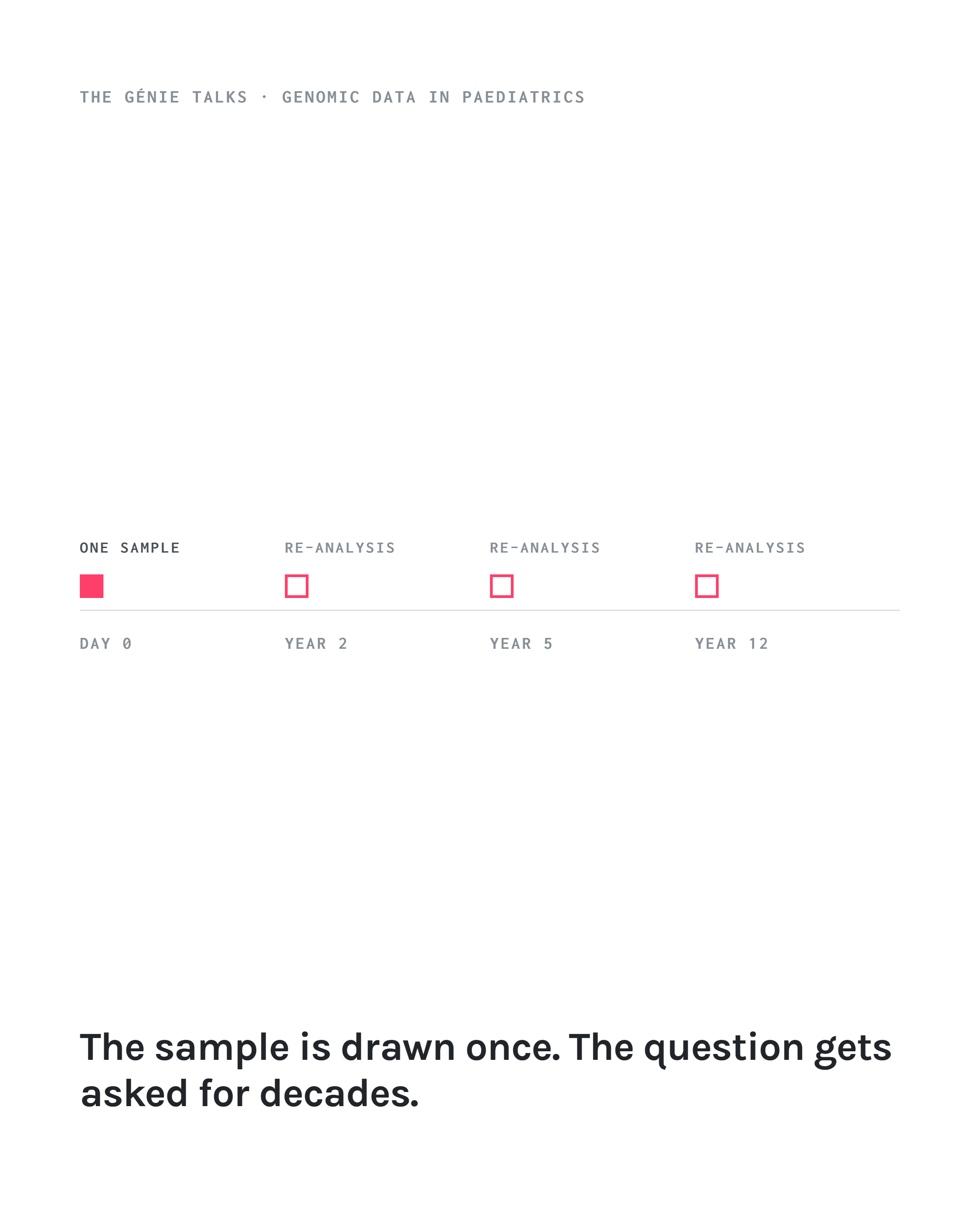
WES data is a snapshot of what we understood about coding regions in a specific year. WGS data is a permanent digital asset. As our understanding of the dark genome grows, we can re-analyse a child's WGS data throughout their life without ever drawing blood again.
Economic gravity
The argument for WES was always cost. But as the price of sequencing the entire genome continues to plummet, the exome discount is shrinking. When you factor in the cost of a prolonged NICU stay without a diagnosis, at thousands of dollars per day, WGS pays for itself by shortening the diagnostic odyssey.
The future is genomic by default
We are reaching a point where choosing WES over WGS is like choosing a map that only shows the highways while ignoring the side streets and the terrain itself. For a newborn in crisis, every inch of that map matters.
Whole Genome Sequencing is no longer a luxury of research; it is the infrastructure of modern paediatrics. By making it the standard of care, we stop searching for needles in haystacks and simply turn on the lights.