

Atrandi Biosciences
Atrandi Biosciences builds two kinds of microscale compartment for single-cell work.
Semi-permeable capsules hold one cell and its DNA while buffers and enzymes pass through the shell. Lysis, amplification and barcoding then run one after another on the same cell.
Picolitre droplets run functional assays on millions of cells or enzyme variants, and the hits are sorted on fluorescence.
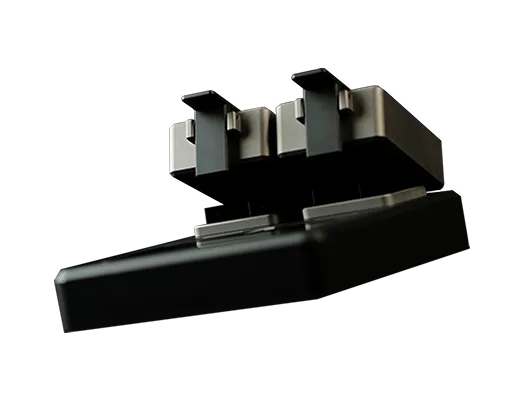
Push-button generation of 80 µm semi-permeable capsules, up to eight samples per kit
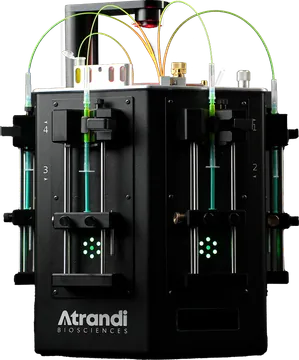
Generates droplets and semi-permeable capsules, with reagent addition and droplet merging on the chip
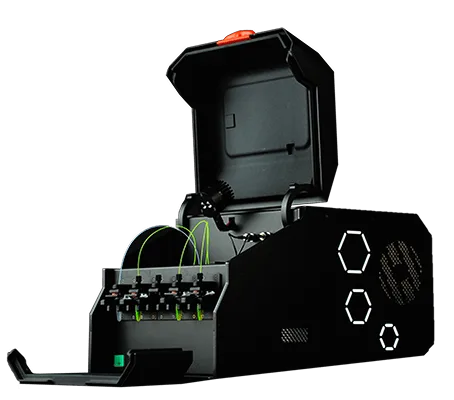
More than a supplier. A local partner.
Local support
Field application and engineering teams across six cities in India: Gurugram, Delhi, Mumbai, Chennai, Bengaluru and Hyderabad.
Consumables continuity
Managed import, customs clearance and cold-chain logistics keep reagents flowing without interruption.
Validated onboarding
Our in-house bioinformatics team validates the platform into working pipelines, so it delivers results, not just readouts.
About Atrandi Biosciences
Atrandi Biosciences was founded in Lithuania in 2016 as Droplet Genomics. The name means "you discover" in Lithuanian.
The company invented and patented the semi-permeable capsule. It has a team of more than 80 and is certified to ISO 9001 and ISO 14001. As of July 2026 it had 199 instruments installed at customer sites, and its staff had co-authored more than 90 publications.
Source: Atrandi Biosciences, August 2026.
Two compartments, two jobs
| Droplets | Semi-permeable capsules | |
|---|---|---|
| Structure | Water-in-oil microdroplets | Liquid core inside a thin, semi-permeable shell |
| Reagents | Closed chamber; reagents can be added, but none can be removed | Buffers and enzymes exchange freely through the shell |
| Best suited to | Ultra-high-throughput functional screening | Sequencing and other multi-step single-cell workflows |
| Platforms | Onyx to generate, Styx to sort | Flux or Onyx to generate |
Semi-permeable capsules
A capsule is an aqueous core inside a crosslinked polymer shell. Small molecules, buffers and many enzymes pass through the shell. Cells and long nucleic acids stay inside.
Capsules pellet like cells, so each buffer exchange takes only a centrifuge and a pipette. That means lysis, amplification and barcoding can each run under their own optimal chemistry, one after another, on the same cell.
What the shell holds and passes
- Double-stranded DNA longer than 200 bp is retained, and so are single-stranded DNA and RNA longer than 500 bp.
- Enzymes shown to cross the shell include Phi29 DNA polymerase, M-MLV and Maxima H− reverse transcriptases, T4 DNA ligase, Taq and Phusion polymerases, and T4 polynucleotide kinase. This is functional evidence under the conditions tested, not a strict molecular-weight cutoff.
Retention thresholds: atrandi.com. Enzymes: manufacturer data, not peer reviewed.
What the capsules withstand
- 1% SDS, 4% guanidinium thiocyanate, and pH from 2 to 12
- PCR thermal cycling, isothermal amplification, and 100 °C for 15 minutes
- Vortexing, pipetting, and centrifugation above 5,000 × g
Manufacturer data, not peer reviewed.
A release reagent dissolves the shell in five minutes at room temperature, with no heat or enzymes. Nucleic acids, barcoded libraries and live cells come out intact.
Single-cell microbial whole genome sequencing
Bulk metagenomics reconstructs genomes by binning DNA from many cells, so it rarely shows which cell carried which plasmid, phage or resistance gene. Sequencing single cells in capsules keeps each genome together with the mobile elements inside the same cell.
Workflow
- Encapsulation, about 30 minutes
- Lysis
- Whole genome amplification
- Four rounds of split-and-pool combinatorial barcoding
- Capsule release and standard library preparation
- Sequencing
- Demultiplexing, using a script supplied by Atrandi
From encapsulation to sequencing-ready library takes about 12 hours, with several stopping points along the way.
Kit and platform
- The Single-Cell Microbial WGS Kit covers lysis through library preparation, with 2 runs of up to 10,000 barcoded cells each.
- Onyx 65 µm capsules are validated for this workflow. Flux 80 µm capsules are compatible with it.
Published results
- Seawater (Weinheimer et al., Nature Microbiology, 2025). Bigelow Laboratory recovered 2,037 single-particle genomes from 300 nL of seawater. Of these, 54% were high or medium quality, against about 22% from FACS-sorted particles and about 1% from metagenomic assemblies. A viral family, Naomiviridae, drew essentially no reads from the metagenomes.
- Pig faeces and sewage (Ling et al., Frontiers in Microbiology, 2025). The Technical University of Denmark recovered 17,909 single amplified genomes from pig faecal samples and 12,731 from sewage. The data linked antimicrobial resistance genes to hosts, including Streptococcus suis.
- Paddy soil (Sallet et al., ISME Communications, 2025). EPFL combined capsules, FACS and an in-capsule biosensor to screen for arsenic-methylating anaerobes. 56 of 298 isolates gave a biosensor signal, and methylation was confirmed in two pure isolates. The workflow took about 20 days, with under 15 hours of hands-on time.
Limits to plan around
- At standard loading, about one capsule in ten holds a single cell.
- Lysis chemistry and sample handling decide which cells make it into the data. In the pig faecal study, handling before encapsulation appears to have lysed Gram-negative cells, and Prevotella was under-represented. Metagenomics recovered more overall diversity in that study.
- A free phage is linked to its host only when both land in the same capsule. That depends on their relative concentrations, so phage-host mapping is partial.
- A resistance gene found in a single-cell genome is genotypic evidence. It does not confirm phenotypic resistance.
Droplet screening with Onyx and Styx
Plate-based screening typically tests 10⁴ to 10⁵ variants from libraries that can be many orders of magnitude larger. Droplets move each reaction into a picolitre compartment, so millions can run in parallel on far less reagent.
Workflow
- Generate. Onyx encapsulates cells or variants into droplets.
- Assay. Reactions run in each droplet. Reagents can be added, or droplets merged, after generation.
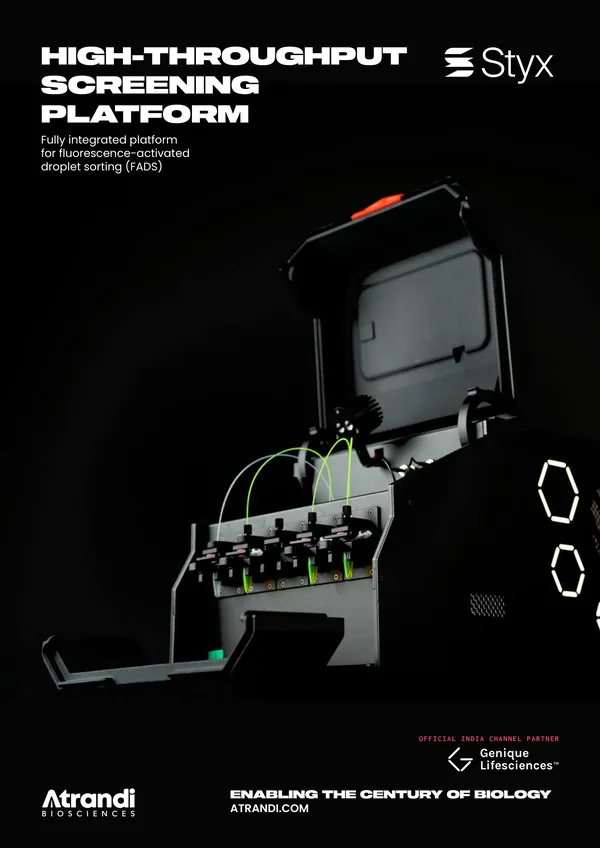
- Select. Styx reads each droplet's fluorescence and sorts the positive ones into a collection tube.
Onyx
- Droplets from about 23 to 200 µm, depending on the kit
- Up to about 21 million droplets per hour with the higher-throughput kits
- Reagent addition and droplet merging through snap-on chip connections and onboard voltage
- Runs inside biosafety cabinets, cold rooms, clean rooms, laminar flow hoods and anaerobic chambers
- Software for droplet size, occupancy and uniformity, with time-lapse and high-speed imaging
Styx
- Excitation lasers at 405, 488, 561 and 637 nm
- Nine selection parameters, covering mean and peak fluorescence across four channels and signal duration
- Up to about 2 million droplets sorted per hour with 30 to 40 µm droplets, and fewer with larger droplets
- Polygonal gating, sub-gating, and dual field-of-view monitoring
Which assays fit
A good candidate is an assay that already works in a plate and gives a fluorescent readout. That includes enzymatic activity, substrate conversion, ligand binding, reporter gene expression and genetically encoded biosensors.
Styx sorts on fluorescence only. A readout based on growth, absorbance or colour change needs a fluorescent proxy before it can be sorted.
Published droplet screening studies
- A bee gut microbiome was screened for riboflavin producers without isolating strains first. The top hyperproducers showed 18 times the fluorescence of the median strain (Xiao et al., LWT, 2026).
- Evolved T7 RNA polymerase variants were enriched 54-fold in a single fluorescence-activated droplet sorting run (Kapustina et al., ACS Synthetic Biology, 2021).
- A yeast α-amylase library was screened at about 300 times the throughput of the industry-standard method, with about a two-fold production gain (Sjöström et al., Lab on a Chip, 2014).
These studies used a range of instruments, and not all used Atrandi hardware. The α-amylase study used custom in-house microfluidics.
Kits
SPC Innovator Kits, for Onyx
| Cat. No. | Capsule diameter | Cell diameter limit | Generation rate | Runs per kit | FACS compatible |
|---|---|---|---|---|---|
| CKN-G52 | 30 ± 5 µm | Up to 10 µm | About 2,300 Hz | 6 | Yes |
| CKN-G11 | 65 ± 5 µm | Up to 30 µm | About 300 Hz | 6 | Limited |
| CKN-G55Q | 170 ± 30 µm | Up to 60 µm | About 40 Hz | 3–6 | No |
| CKN-G67Q | 300 ± 30 µm | Up to 100 µm | About 40 Hz | 3–6 | No |
Generation rate is capsules per second. The 170 µm and 300 µm capsules are sized for spheroids and organoids.
SPC Generation Kit, for Flux
| Cat. No. | Capsule diameter | Cell diameter limit | Capsules per run | Capacity |
|---|---|---|---|---|
| CKP-G34 | 80 µm | 30 µm | 200,000 (about 30 min) | 8 samples |
Storage is at 4 °C, and all kits are Research Use Only.
Application kits
- Single-Cell Microbial WGS Kit. Lysis, whole genome amplification, barcoding and library preparation, with 2 runs of up to 10,000 barcoded cells each. SPC generation kit sold separately.
- dsDNA Barcoding Kit. For custom single-cell DNA workflows. Covers end preparation, barcoding and library preparation.
Droplet generation, droplet manipulation and droplet selection kits for Onyx and Styx are listed with catalogue numbers in the platform brochures.
Early access: RNA and DNA from the same cell
Atrandi offers early access to a capsule-based assay that reads 3′ gene expression and targeted DNA variants, amplified with a custom PCR panel, from the same cell. A whole-genome and whole-transcriptome version is a protocol still in development.
The assay captures polyadenylated RNA, so it is designed for eukaryotic cells rather than bacterial transcripts.
Single-cell RNA sequencing in semi-permeable capsules has been published as CapSeq (Baronas et al., Science, 2026), from Vilnius University and Atrandi Biosciences.
Availability and specifications are subject to confirmation by Atrandi.
Why we offer it
It brings single-cell and microbiome research within reach for Indian labs, with sequencing-ready libraries that feed straight into the NGS workflows we already support.
Where it sits in the Genique stack
Atrandi Biosciences sits in the library preparation tier. Unlike the rest of that tier, it partitions single cells and single microbes so that each one can be read on its own.
- 01 · Sample prep
Extraction & reagents
- 02 · Library prep
Targeted panels & single-cell
- SOPHiA GENETICS
- Gene Solutions
- Paragon Genomics
- Diatech Pharmacogenetics
- Atrandi Biosciences
- 03 · Sequencing
Short-read sequencing
- 04 · Analysis
Analysis & interpretation
- 05 · Report
Interpretation & reporting
- The platforms: Flux and Onyx generate semi-permeable capsules. Onyx also generates droplets, and Styx sorts them.
- What capsules add: reagents and nutrients can be exchanged while the contents stay partitioned. That is what makes multi-step chemistry, and culture within a partition, possible.
- Applications it opens: single-cell microbial genomics, strain engineering, directed evolution and biocatalyst screening.
- What it feeds: short-read sequencing, and Genique bioinformatics for the analysis, which is rarely off the shelf for this kind of work.
How Genique supports it in India
Supplied and supported by Genique in India as the official channel partner.
- Lead time: four weeks from purchase order to delivery.
- Service: an engineer on site, from the field team in six cities.
- Training: on site, for as many people as the laboratory needs trained rather than a fixed number of seats. One to two days.
- Consumables: four weeks to replenish.
Regulatory status in India
Atrandi supplies single-cell partitioning instruments and their consumables, labelled by the manufacturer for research use.
- Labelling: Research Use Only. That holds even where a product carries CE-IVD, CE-IVDR or FDA marking in another jurisdiction, because an approval granted elsewhere does not travel to India.
- CDSCO: nothing on this page is approved or licensed by the Central Drugs Standard Control Organisation as an in-vitro diagnostic device.
- What accreditation does and does not cover: accreditation of a laboratory evidences the quality system and the method validation under which work is performed. It does not change the regulatory status of an assay.
- What this means for a NABL laboratory: this is research instrumentation, and work on it sits outside the diagnostic menu unless the laboratory validates a method of its own on top of it.
Application presentations
Atrandi application presentations are available from the Genique team on request:
- Single-cell microbial whole genome sequencing
- Microbial strain and enzyme engineering
References
- Weinheimer AR, et al. Nature Microbiology (2025). doi:10.1038/s41564-025-02167-5
- Ling et al. Frontiers in Microbiology (2025). doi:10.3389/fmicb.2024.1516656
- Sallet H, et al. ISME Communications (2025). doi:10.1093/ismeco/ycaf081
- Xiao et al. LWT Food Science and Technology (2026). doi:10.1016/j.lwt.2026.119036
- Kapustina et al. ACS Synthetic Biology (2021). doi:10.1021/acssynbio.1c00112
- Sjöström et al. Lab on a Chip (2014). doi:10.1039/C3LC51202A
- Baronas D, et al. Science (2026). doi:10.1126/science.ady7227
Company figures, capsule performance data and the Flux kit: Atrandi Biosciences, August 2026. SPC Innovator Kit specifications and retention thresholds: atrandi.com, checked 29 September 2026.
See it in action
Platform presentations
More videos (4)
Selected webinars
Videos courtesy of Atrandi Biosciences.
Resources
Brochures
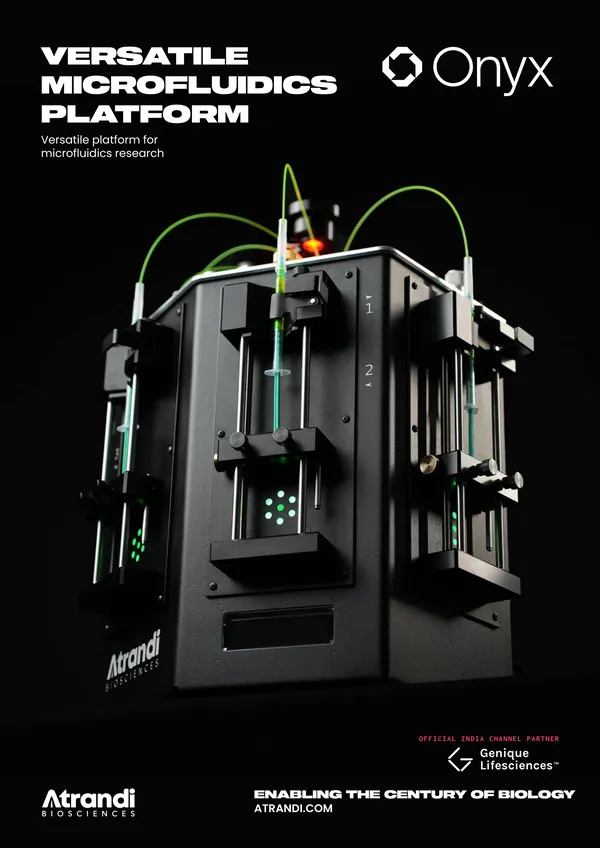
Platform brochures from Atrandi Biosciences, with Genique's India contact details.
Interested in Atrandi Biosciences?
Talk to our team about how it fits your needs.